

Why repurposing matters
Publishing an article once is not enough. A useful article can become social posts, email snippets, short videos, carousel outlines, sales notes, and FAQ answers. Small teams often skip this because the repurposing work feels like a second job.
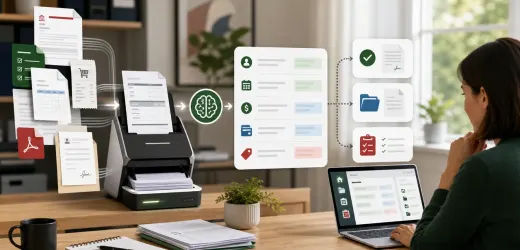
AI can help turn one article into a distribution package. The key is to keep the original article as the source of truth and adapt the message for each channel.
This workflow extends the small business AI content workflow. It helps every article work harder after publication.
The basic workflow
After an article is published:
1. Extract the key points.
2. Identify the strongest practical tips.
3. Create channel-specific drafts.
4. Add human review.
5. Schedule posts.
6. Track which angles get attention.
7. Use results to improve future articles.
This turns content into a repeatable system.
Step 1: Extract the core message
Ask AI for:
- Main promise.
- Target reader.
- Top 5 insights.
- Best checklist.
- Strongest example.
- Common mistake.
- Next recommended article.
This prevents generic posts.
Step 2: Create LinkedIn posts
LinkedIn posts should usually be practical and direct:
- Start with a problem.
- Share a lesson.
- Give a short checklist.
- End with a question or next step.
Prompt:
```
Turn this article into three LinkedIn post drafts.
Each post should focus on one practical lesson.
Use a clear professional tone.
Do not use hype.
Keep each under 180 words.
```
Step 3: Create short social posts
For shorter platforms, create:
- One sharp tip.
- One mini checklist.
- One mistake to avoid.
- One question for the audience.
- One link post.
The goal is not to summarize everything. It is to create entry points into the full article.
Step 4: Create an email snippet
Email snippets should explain why the reader should care now:
- Name the problem.
- Share one useful idea.
- Link to the full article.
- Keep it short.
This is especially useful if newsletter is enabled later.
Step 5: Create a carousel outline
A carousel outline can follow this structure:
1. Problem.
2. Why it matters.
3. Mistake.
4. Step 1.
5. Step 2.
6. Step 3.
7. Checklist.
8. Call to read the full guide.
Use carousels for articles with clear steps, such as AI email automation for small business or AI lead follow-up system.
Step 6: Create internal sales notes
Some articles can help sales. Convert them into:
- A short explanation.
- A customer pain point.
- A recommended workflow.
- A link to send prospects.
- Three discovery questions.
This makes content useful beyond SEO.
Step 7: Track winning angles
Track:
- Which headline got clicks.
- Which pain point got replies.
- Which checklist was saved.
- Which topic generated questions.
- Which article received traffic after posting.
If one angle works, publish a supporting article around it.
Quality rules
Do not let AI:
- Invent facts not in the article.
- Add fake statistics.
- Use the same caption everywhere.
- Overuse buzzwords.
- Hide the practical value.
Every repurposed asset should point back to the original article or the next best guide.
Example repurposing package
For an article about AI appointment scheduling:
- LinkedIn post: why no-shows are an operations problem.
- Short post: 3 reminder timings to test.
- Email snippet: how to stop losing bookings after form submission.
- Carousel: appointment request to follow-up workflow.
- Sales note: send to service businesses with booking friction.
This turns one article into multiple traffic paths.
Final checklist
Before publishing the distribution package:
- The article is the source of truth.
- Each post has one clear point.
- Internal links are included where useful.
- Claims are checked.
- Channel tone is adapted.
- Performance is tracked.
AI social media repurposing should make content distribution easier, not noisier. The best posts feel like useful standalone advice, with the article waiting for readers who want the full workflow.


No comments yet.
Be the first to ask a question or add a useful note.